I was reading Jim Butcher’s novel “Proven Guilty” a few
weeks ago. Within the plot, the main character, Dresden, struggled against the
summer heat as he weaved through the plot. I found the element interesting. In
fact, in one scene Dresden left without his shielded trench coat due to the
heat then wound up vulnerable in a battle with a monster. I started thinking
about this and realized most books are without seasons. The authors may
describe certain regional elements. For example, if characters are in Louisiana
they will discuss the humidity and if the characters are in Arizona they will
discuss the bright sun. But nothing is given in extremes.
In fact, most season books I can think of are theme related:
Christmas joy or Halloween horror. One seasonal movie “Valentine’s Day” centered
on that particular holiday. I’m not sure why people believe seasons have to
relate to holidays. The only reason I can think of is that the holiday is the
center of the story they want to tell. With the Valentine’s Day movie, the
theme was obviously how couples and singles deal with the glamorous holiday. Yet,
I remember reading a mystery by Marry Higgins Clark called “All Through the
Night,” that was centered around Christmas time. This is the first book that
was not focused on Christmas in the Santa Clause or Meaning of Life type
stories. Yet, just like in Butcher’s novel, it added a flavor to the story.
I think, as writers, we are missing the power of seasonal
elements. Sometimes the worst things we have to face as humans—the most
destructive “monsters”—come from natural elements. In Butcher’s novel, the choice
of wearing a protective coat that will compound the already unbearable heat and
leaving it behind against ferocious villains is an interesting one. When he
leaves it behind, the reader understands. When he decides to take it along and
suffer the heat after a gruesome battle, the reader understands and sympathizes.
Such a simple act, and yet it heightens conflict. In Marry Higgins Clark’s
novel, the story centers around a woman separated from her child seven years
ago. Solving this mystery around Christmas only heightens the emotion of the
plot. What was once simplistic and ordinary became captivating.
I think writers stray away from seasons for a simple reason.
Nobody wants to read a book with Christmas in it outside of December, so the
time of publication becomes important. Likewise, readers may not want to read
about summer heat while cooped up by a winter storm. Yet, I think seasons are still
important for a few reasons. First, they provide added conflict. Second, they
can help the setting—an Arizona summer is vastly different than a Louisiana
one. Third, in an industry stressing the importance of description, it provides
an easy avenue to break up the dialogue.
I think the bland atmosphere is important. But, every now
and then, we should venture into seasons and see where it takes the novel.
Friday, June 28, 2013

Thursday, June 27, 2013
Creating Beauty in the Desert of Arizona
Living in the desert of Arizona, USA, we tend to get two seasons instead of four: winter and summer. However, I think most locations would argue that our winter is actually "fall," especially in the low desert like Phoenix, but you get the point. Yet, it cannot be denied that there is still beauty in the desert. This picture was taken outside of a community college where I work part time. It doesn't show beauty specific to the desert--although if you look close in the background you can see a row of our state tree the Palo Verde--but it does show how we can create our own beauty.

I think that's a lot like life. We cannot control the situations in which we live. But we have the power to change our surroundings. We can create beauty...even in a desert.

I think that's a lot like life. We cannot control the situations in which we live. But we have the power to change our surroundings. We can create beauty...even in a desert.
Wednesday, June 26, 2013
Is Writing Fun or Work?
The question for this week comes from Angela Garcia. Thanks!
"Is writing fun or work?"
Writing most definitely starts off as fun. When I found my passion for it, I was twelve. I thought it was so fun that I preferred it over going out with friends. There is a type of joy that comes from the creation. I have tried to describe it to people, but I’m not sure if it comes off clear. So, let me try here. Imagine the best book you have ever read; the one that captures you in your gut. It consumes you, insisting you hurry through life to get back to reading. You fall in love with the characters, totally buy into their lives, and emotions run high as you discover how everything will end. Writing is kind of like that. Only, it is a little different. I already know the ending. So, for me, when I write it is about the journey, how I am going to lead my characters. But I still fall in love with them, care for them…even when I kill them off.
This is where the work comes in. Stories don’t just pour out of writers…at least nobody I know. For me, I usually hit about page 80 and have to fight with the plot a little. Then all goes well until about page 200 and then I have to fight some more. The Lord of Nightmares battled me more than any other book I’ve written, so much so that I ended up gutting out the middle at one point and re-writing it. But, the fight is worth it when everything clicks together, the ideas start flowing once more, and the characters drive forward.
When I was young, I could write when inspiration hit. I used to say I didn’t want to write on a schedule because I thought it would turn what I loved into a chore. I have since seen the inexperience in my opinion. I have to write on a schedule or it doesn’t get done. And, guess what, I still love the process. Similarly, a lot of part-time writers have is that if they get the huge book deal from a top publisher, then they will have deadlines. Deadlines mean writers can no longer take their time with the creation. The question becomes, does it become work? It should always be somewhat difficult. After all, sometimes the best things in life come with a struggle—that’s what makes us appreciate their value.
Right now, writing is still more fun than work. I think the moment it becomes work, I will have to find a new passion—or at least step back and remember why I got into the business in the first place.
Have a question for me? Wondering something about my novels? Have a question you always wanted to ask any writer? Click here and fill out the form. I will try to answer one every week.
"Is writing fun or work?"
Writing most definitely starts off as fun. When I found my passion for it, I was twelve. I thought it was so fun that I preferred it over going out with friends. There is a type of joy that comes from the creation. I have tried to describe it to people, but I’m not sure if it comes off clear. So, let me try here. Imagine the best book you have ever read; the one that captures you in your gut. It consumes you, insisting you hurry through life to get back to reading. You fall in love with the characters, totally buy into their lives, and emotions run high as you discover how everything will end. Writing is kind of like that. Only, it is a little different. I already know the ending. So, for me, when I write it is about the journey, how I am going to lead my characters. But I still fall in love with them, care for them…even when I kill them off.
This is where the work comes in. Stories don’t just pour out of writers…at least nobody I know. For me, I usually hit about page 80 and have to fight with the plot a little. Then all goes well until about page 200 and then I have to fight some more. The Lord of Nightmares battled me more than any other book I’ve written, so much so that I ended up gutting out the middle at one point and re-writing it. But, the fight is worth it when everything clicks together, the ideas start flowing once more, and the characters drive forward.
When I was young, I could write when inspiration hit. I used to say I didn’t want to write on a schedule because I thought it would turn what I loved into a chore. I have since seen the inexperience in my opinion. I have to write on a schedule or it doesn’t get done. And, guess what, I still love the process. Similarly, a lot of part-time writers have is that if they get the huge book deal from a top publisher, then they will have deadlines. Deadlines mean writers can no longer take their time with the creation. The question becomes, does it become work? It should always be somewhat difficult. After all, sometimes the best things in life come with a struggle—that’s what makes us appreciate their value.
Right now, writing is still more fun than work. I think the moment it becomes work, I will have to find a new passion—or at least step back and remember why I got into the business in the first place.
Have a question for me? Wondering something about my novels? Have a question you always wanted to ask any writer? Click here and fill out the form. I will try to answer one every week.
Tuesday, June 25, 2013
Changing Seasons: Persephone
The tale I find the most interesting in mythology is the one regarding
Persephone. Daughter of Demeter, Persephone was out playing in the fields one
day. Hades, god of the underworld, took notice, "fell in love," and
kidnaped her. Demeter, of course, threw a fit and let every plant on the earth
die until Zeus intervened.
However, because Persephone had eaten 4 pomegranate seeds (or 6 I can't remember) she had to stay in the underworld for 4 months out of the year. During her stay in the underworld, Demeter would let the plants wilt until her return, hence the emergence of winter.
What strikes me about the myth is that Persephone marries Hades and is queen of the underworld. So, basically a stalker kidnaps the woman of interest, marries her, and everyone agrees she has to live with him--that it's only fair. The myth never discusses if she "loves" Hades and enjoys her time with him. The myth goes against all modern love stories. It reinforces the possessive husband and devalues the woman's choice.
Try to sell that story in today's market and publishers would laugh you out of their office. But, there its stands as the explanation of why we have winter months. Gotta love the tragedy in Greek Mythology.
However, because Persephone had eaten 4 pomegranate seeds (or 6 I can't remember) she had to stay in the underworld for 4 months out of the year. During her stay in the underworld, Demeter would let the plants wilt until her return, hence the emergence of winter.
What strikes me about the myth is that Persephone marries Hades and is queen of the underworld. So, basically a stalker kidnaps the woman of interest, marries her, and everyone agrees she has to live with him--that it's only fair. The myth never discusses if she "loves" Hades and enjoys her time with him. The myth goes against all modern love stories. It reinforces the possessive husband and devalues the woman's choice.
Try to sell that story in today's market and publishers would laugh you out of their office. But, there its stands as the explanation of why we have winter months. Gotta love the tragedy in Greek Mythology.
Monday, June 24, 2013
Monday's Quote
"Little by little, one travels far." ~J. R. R. Tolkien
I like this quote because it works in so many different situations. When setting any goal/dream, we tend to think of the entire journey. And, if you are like me, you think you should get there in two really big jumps. What life has taught me so far is that I must be patient. This is not one of my virtues, although I certainly try, so I have to keep reminding myself of it.
The things we want takes time. But, we have to keep moving forward, even if it is just one little step at a time. Eventually, we will look back and see how far we have traveled. For me, looking back gets me excited. Just imagine where I can travel next!
I like this quote because it works in so many different situations. When setting any goal/dream, we tend to think of the entire journey. And, if you are like me, you think you should get there in two really big jumps. What life has taught me so far is that I must be patient. This is not one of my virtues, although I certainly try, so I have to keep reminding myself of it.
The things we want takes time. But, we have to keep moving forward, even if it is just one little step at a time. Eventually, we will look back and see how far we have traveled. For me, looking back gets me excited. Just imagine where I can travel next!
Friday, June 21, 2013
Pacing a Story: It's about Patience
Most people consider pacing only in the suspense genre, and
I agree this is an important element. The very definition of a suspense novel
is that it keeps the page turning until the very end. In fact, a boring
suspense novel is an oxymoron of sorts. Yet, I will contend that pacing is just
as valuable in all other genres. In fact, when an author nails pacing, readers
will always shout they couldn’t put the book down and were sad when it ended.
A novel should take the reader on a rollercoaster ride. What many don’t realize is such a ride has to be crafted. Think of the actual rollercoaster. Engineers spend years planning every twist, turn, loop and leveling. The same idea holds with the progression of novels. Attend any writer’s conference and you are sure to find one of two workshops: the three act structure and plot lines. I actually hate the plot line. This is the curve English teachers sketch on the chalkboard. It shows a steady climb until it peaks and then declines to the conclusion (which is always higher than the initial starting point). One, I am curious why the end always is higher. Two, it reminds me too much of a bell curve. I understand the philosophy behind the structure—attempting to discuss pacing—but true novels do not follow this steady path, at least not where reader’s emotions are concerned. A true plot line should look like a rollercoaster ride…but I guess that wouldn’t be as pretty on a chalkboard.
Pacing is tricky. One of the biggest challenges is not to rush, at least for me. I get so excited. My emotions push me to get to the end. But, if I rush, then the story will fall flat. That actually happened to the very first novel I wrote—which only lasted 50 pages, so it turned into not even a novella. I grew impatient to reach the end, and thereby destroyed the ride. The best advice I have been given is to slow down a scene when it starts to get good. This is easier to do in the revision stage, where most of my description takes place. But, slowing down too much can kill the tension as well. I just finished a novel in which the author conducted scene after scene rehashing information through dialogue in different viewpoints. The result was a feeling that he was trying to hit a required page count instead of following the natural progression of the novel.
Pacing is by far what makes a novel difficult to write. It is also the most important aspect of a plot. As writers, we need to be engineers. Have the patience to allow a story to develop. But, we also need to be flexible. After all, our ride is not metal. We need to adapt mid-ride, if necessary. Only then can we create a story readers can’t put down, and that is the best feedback a writer can receive.
A novel should take the reader on a rollercoaster ride. What many don’t realize is such a ride has to be crafted. Think of the actual rollercoaster. Engineers spend years planning every twist, turn, loop and leveling. The same idea holds with the progression of novels. Attend any writer’s conference and you are sure to find one of two workshops: the three act structure and plot lines. I actually hate the plot line. This is the curve English teachers sketch on the chalkboard. It shows a steady climb until it peaks and then declines to the conclusion (which is always higher than the initial starting point). One, I am curious why the end always is higher. Two, it reminds me too much of a bell curve. I understand the philosophy behind the structure—attempting to discuss pacing—but true novels do not follow this steady path, at least not where reader’s emotions are concerned. A true plot line should look like a rollercoaster ride…but I guess that wouldn’t be as pretty on a chalkboard.
Pacing is tricky. One of the biggest challenges is not to rush, at least for me. I get so excited. My emotions push me to get to the end. But, if I rush, then the story will fall flat. That actually happened to the very first novel I wrote—which only lasted 50 pages, so it turned into not even a novella. I grew impatient to reach the end, and thereby destroyed the ride. The best advice I have been given is to slow down a scene when it starts to get good. This is easier to do in the revision stage, where most of my description takes place. But, slowing down too much can kill the tension as well. I just finished a novel in which the author conducted scene after scene rehashing information through dialogue in different viewpoints. The result was a feeling that he was trying to hit a required page count instead of following the natural progression of the novel.
Pacing is by far what makes a novel difficult to write. It is also the most important aspect of a plot. As writers, we need to be engineers. Have the patience to allow a story to develop. But, we also need to be flexible. After all, our ride is not metal. We need to adapt mid-ride, if necessary. Only then can we create a story readers can’t put down, and that is the best feedback a writer can receive.
Thursday, June 20, 2013
Books with Good Pacing
So, I have been discussing the need to let a story flow naturally. I truly believe that pacing is both created as well as allowed to happen. I thought I would provide a few novel options that I think have captured the art of pacing.
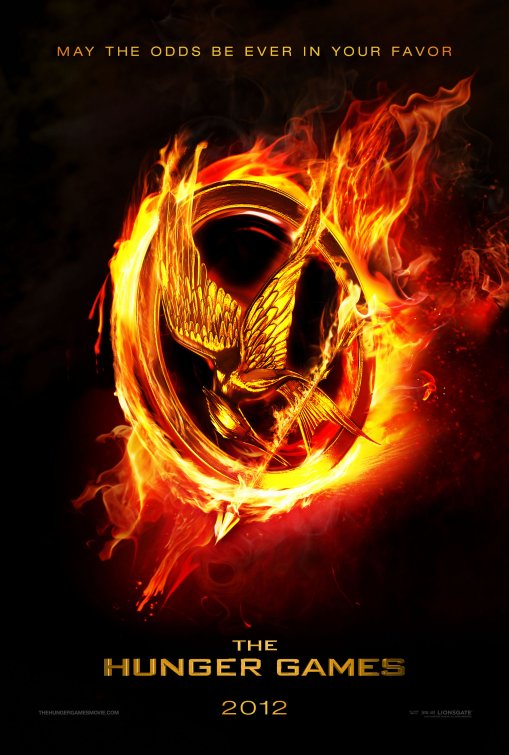 I know this book series is probably over referenced, but it is still a good example of pacing. Suzanne Collins does not rush the story. She takes her time introducing Katniss. She doesn't jump into the game, which is tempting since it is intriguing. Instead, she takes her time to showcase the capitol, bringing the society and politics to life. She also develops the characters so when she does enter the game, the emotions are that much greater. Her three books are clearly organized, but do not feel forced. They let the story develop one page at a time.
 I grew up reading Mary Higgins Clark. I kept coming back because, simply, the woman knows her pacing, especially in this particular book. She doesn't fill her books with one action sequence to another, which seems to be the trend right now. She knew how to dangle facts, lead a reader as she developed a story. She took the time to introduce the characters, making the reader buy into caring about them, all the while dangling the element of danger.

This is probably my favorite of Harlan Coben's novels. But, in all of his novels, the intrigue is curiosity. How is he going to wrap the story together? What events are happening? Again, he takes his time developing characters and their back story. But he doesn't linger for too long. Plot twists and turns are obviously crafted from the beginning. But, what I admire about him is his ability to spend just enough time in each element: character development, back story, plot twists, gathering information. It doesn't "feel" like a dragging investigation. He keeps the reader interested from page one.
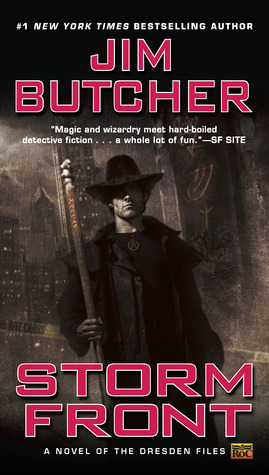
I actually love all of the books in this series, so decided to show the first book. In all of them, Harry Dresden juggles his role as private investigator, consultant for the police, and wizard. Once again, the plot is obviously crafted and intertwined. Yet, Butcher spends just enough time in each plot line. The dialogue always leads the reader somewhere, although the destination is never certain. I also like that he never relies on the convenient twist turn--one that was not developed and introduced as an epiphany after building toward a completely different avenue. He spends time developing Harry as a character, as well as the various individuals in his line of work, but he doesn't overdo it. He also takes the time to allow Harry to be misdirected, and yet it doesn't feel like wasted pages.
Ultimately, the power of pacing, no matter the genre, is to guarantee a reader is always moving forward. Everything advances a plot. The moment a story starts to dawdle, the pacing is destroyed and the reader becomes bored. At least, in my opinion.
I know this book series is probably over referenced, but it is still a good example of pacing. Suzanne Collins does not rush the story. She takes her time introducing Katniss. She doesn't jump into the game, which is tempting since it is intriguing. Instead, she takes her time to showcase the capitol, bringing the society and politics to life. She also develops the characters so when she does enter the game, the emotions are that much greater. Her three books are clearly organized, but do not feel forced. They let the story develop one page at a time. I grew up reading Mary Higgins Clark. I kept coming back because, simply, the woman knows her pacing, especially in this particular book. She doesn't fill her books with one action sequence to another, which seems to be the trend right now. She knew how to dangle facts, lead a reader as she developed a story. She took the time to introduce the characters, making the reader buy into caring about them, all the while dangling the element of danger.
This is probably my favorite of Harlan Coben's novels. But, in all of his novels, the intrigue is curiosity. How is he going to wrap the story together? What events are happening? Again, he takes his time developing characters and their back story. But he doesn't linger for too long. Plot twists and turns are obviously crafted from the beginning. But, what I admire about him is his ability to spend just enough time in each element: character development, back story, plot twists, gathering information. It doesn't "feel" like a dragging investigation. He keeps the reader interested from page one.
I actually love all of the books in this series, so decided to show the first book. In all of them, Harry Dresden juggles his role as private investigator, consultant for the police, and wizard. Once again, the plot is obviously crafted and intertwined. Yet, Butcher spends just enough time in each plot line. The dialogue always leads the reader somewhere, although the destination is never certain. I also like that he never relies on the convenient twist turn--one that was not developed and introduced as an epiphany after building toward a completely different avenue. He spends time developing Harry as a character, as well as the various individuals in his line of work, but he doesn't overdo it. He also takes the time to allow Harry to be misdirected, and yet it doesn't feel like wasted pages.
Ultimately, the power of pacing, no matter the genre, is to guarantee a reader is always moving forward. Everything advances a plot. The moment a story starts to dawdle, the pacing is destroyed and the reader becomes bored. At least, in my opinion.
Subscribe to:
Posts (Atom)